
One Night Stand
Play One Night Stand
One Night Stand Screenshots


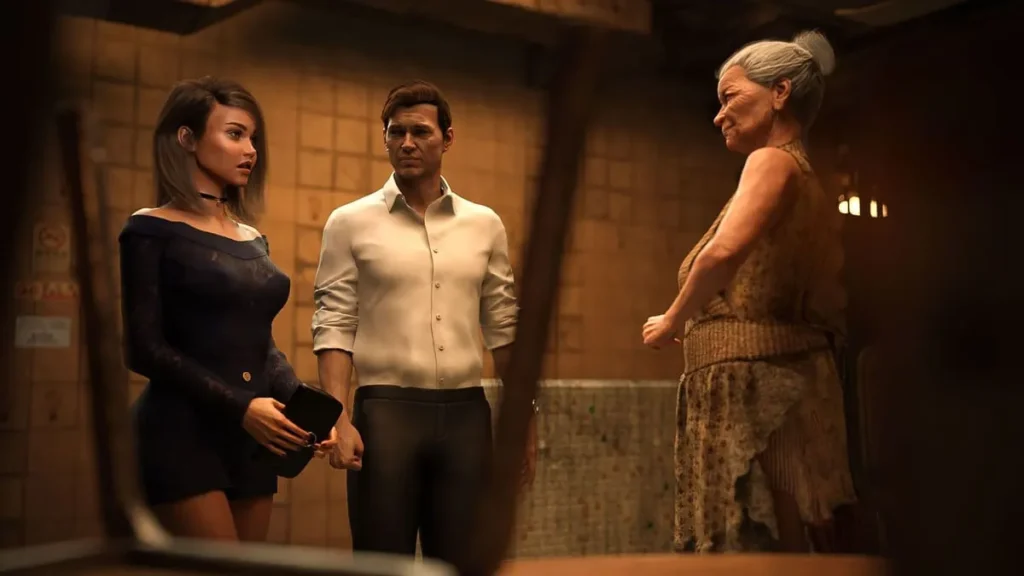



One Night Stand review
Explore storylines, mechanics, and relationship outcomes in this indie visual novel
One Night Stand is an indie visual novel that puts players in a unique scenario: waking up naked next to a stranger with no memory of the previous night. Released as part of NaNoRenO 2016 by developer Kinmoku, this game has captivated players with its branching narrative and relationship-building mechanics. The visual novel challenges you to piece together what happened while making choices that determine your future relationship with your mysterious bedmate. Whether you’re new to visual novels or a seasoned player, understanding the game’s mechanics, story branches, and character dynamics will enhance your experience and help you unlock different endings.
Understanding One Night Stand: Game Overview and Mechanics
Ever woken up in a strange room, with a pounding headache, and absolutely no memory of how you got there? 😵 That’s the deliciously awkward and compelling premise of One Night Stand, a brilliant indie visual novel that turns a single morning after into a masterclass of interactive storytelling. You open your eyes to a bedroom you don’t recognize, next to a woman whose name you can’t recall. Your mission isn’t to fight dragons or solve a murder—it’s to navigate one of life’s most socially delicate situations with only your wits, your conscience, and a series of carefully chosen words.
Developed by the talented Kinmoku and first created for the NaNoRenO 2016 game jam, this experience proves that the most powerful stories are often the most intimate. It later found a well-deserved home on Steam, allowing a wider audience to discover its charms. As a choice-based narrative game, its power lies entirely in your hands. Every glance, every question, and every piece of clutter you examine shapes the story. This isn’t about grand gestures; it’s about the subtle, often silent, language of human connection. Let’s dive into how this unique game works and why its mechanics make it so unforgettable.
What is One Night Stand and How Does It Work?
At its heart, One Night Stand is an exploration of vulnerability and consequence. You play from a first-person perspective, with the entire game taking place in that single, sunlit bedroom. The woman you spent the night with is just as confused and cautious as you are. The “gameplay” is the conversation—the slow, sometimes painful, sometimes humorous process of figuring out who you both are and what, if anything, last night meant.
The genius of this indie visual novel is its commitment to its premise. There are no flashbacks to the party, no cutscenes of the night before. Everything you learn about your character and your companion comes from the present-moment interaction. You’ll look around the room, piecing together clues from discarded clothes, empty bottles, and personal items. Each object you click on isn’t just set dressing; it’s a potential conversation starter or a silent revelation about the person you’re with.
Pro Tip: Don’t rush! The beauty of One Night Stand is in the details. Click on everything. That weird poster, the style of her books, the type of phone she uses—they all paint a picture of her life and personality, giving you better context for your dialogue choices.
The game was initially released for free on itch.io as part of the NaNoRenO event, a testament to its focused, jam-born origins. The positive reception led to a more polished “complete” version on Steam, which added extra dialogue, endings, and enhanced artwork. Here’s a quick breakdown of where you can play:
| Platform | Version | Release Date | Key Features |
|---|---|---|---|
| itch.io | NaNoRenO (Free) | March 2016 | The original game jam version. A perfect, no-cost way to experience the core concept and story. |
| Steam | Complete Edition | November 2016 | The definitive experience. Includes additional scenes, more endings, refined art, and extra dialogue paths. |
Whether you start with the free version or dive straight into the Steam edition, you’re in for a thoughtful, emotionally resonant experience. This branching storyline game proves that you don’t need a budget of millions to create a narrative that sticks with players for years. Its limitation is its strength, forcing creativity and emotional depth into a single, beautifully realized location.
Core Gameplay Mechanics and Decision-Making System
Forget complex stat sheets or quick-time events. The visual novel game mechanics in One Night Stand are elegantly simple, yet they create a web of consequence that feels incredibly real. The entire interface is your cursor and your capacity for empathy. 🎯
The core loop is a dance of observation and dialogue. You wake up and can immediately start looking around. Clicking on an object often gives you an internal monologue—your character’s thoughts about what they’re seeing. Sometimes, these observations simply add to the atmosphere. Other times, they unlock new options when you next speak to your companion. For example, noticing a particular book on her shelf might allow you to bring it up later, showing a shared interest or, conversely, making a clumsy assumption.
This is where the choice-based narrative game mechanics truly shine. When you engage her in conversation, you’re typically presented with 2-4 dialogue options. These aren’t always clear “good” or “bad” choices. Instead, they reflect different attitudes: curious, apologetic, defensive, flirtatious, or detached. The game tracks everything in the background. It remembers if you’ve been kind, if you’ve pried too much, if you’ve taken responsibility for the mess, or if you’ve been desperate to escape.
I remember my first playthrough vividly. I chose what I thought were “nice guy” options—apologizing profusely, offering to clean up, being overly polite. To my surprise, this led to an ending where she politely asked me to leave, feeling like my kindness was insincere or overwhelming. The game had called my bluff! It wasn’t looking for a “correct” path; it was judging the consistency and authenticity of my character’s behavior.
The key mechanics can be broken down like this:
* Environmental Interaction: Clicking on objects to gather information and context.
* Dialogue Trees: Multi-choice conversations where tone is as important as content.
* Hidden Relationship Meter: An invisible score that adjusts based on every action and word.
* Time Pressure: The morning progresses naturally. You can’t linger forever, adding a layer of realistic tension.
The relationship building game aspect is entirely subtextual. You won’t see hearts appear or a trust bar fill up. The feedback is in her facial expressions, her body language, and the tone of her responses. A slight smile, a turned shoulder, a hesitant pause—these are your metrics. This makes every interaction feel genuinely personal and high-stakes. You’re not gaming a system; you’re trying to authentically connect with another person, with all the potential for misunderstanding that entails.
Story Branches and Multiple Endings
The ultimate payoff for your careful (or careless) choices in this branching storyline game is its array of endings. One Night Stand doesn’t have dozens of endings, but each one it offers feels distinct, earned, and emotionally truthful. They range from heartbreakingly cold to warmly hopeful, and everything in between.
Your actions throughout the entire morning culminate in a final conversation that determines your fate. The game evaluates the totality of your behavior. Were you a respectful guest? A judgmental intruder? A kindred spirit? A regretful mess? The ending reflects the sum of these parts. You might exchange numbers with a promise to meet for coffee, leave with a polite but firm goodbye, or get kicked out in a blaze of justified anger. There’s even an ending tied to a specific, secret series of actions that provides a surprising twist on the entire premise.
The beauty is that these branches aren’t triggered by one single “big” choice. They are woven from a fabric of micro-decisions. Here are some key decision points and how they quietly steer the narrative:
- The First Words: How you choose to initiate the first conversation sets the entire tone—apology, confusion, or humor lead down very different paths.
- Handling the Morning After: Do you help clean up the mess from the party, ignore it, or complain about it? This is a major test of your character’s consideration.
- Questioning vs. Listening: Do you bombard her with questions about the night and her life, or do you listen and share about yourself? Prying too hard comes across as invasive, while not showing interest feels detached.
- Judging the Environment: Commenting negatively on her décor, books, or music taste is a near-guaranteed way to sour the mood and close off avenues of connection.
- The Phone Call: When your phone rings (and it will), how you handle that interruption speaks volumes about your priorities in the moment.
This structure encourages repeated playthroughs. It’s incredibly rewarding to go back and try a completely different approach—be more confident, be more vulnerable, be a total jerk (just to see what happens—it’s illuminating!). Because the game is short (each playthrough is about 20-30 minutes), exploring every narrative branch is a feasible and fascinating endeavor. You start to see how early choices close off or open up later dialogue options, creating a truly organic branching storyline.
One Night Stand stands as a testament to the power of focused, character-driven storytelling in games. Its visual novel game mechanics remove all clutter to focus purely on the fragile dance of a human interaction. As an indie visual novel born from a game jam, it achieves more genuine emotional impact in one room than many games do with entire worlds to explore. It’s a must-play for anyone who believes that in games, as in life, the smallest choices often carry the greatest weight. So, take a deep breath, clear your head, and see what kind of morning—and what kind of connection—you can create. ☕️✨
One Night Stand stands out as a memorable indie visual novel that combines mystery, relationship-building, and meaningful player choice into a compact, engaging experience. From the moment you wake up confused beside a stranger to the final moments that determine your relationship’s fate, every decision matters. The game’s strength lies in its ability to create emotional investment in a character you’re literally just meeting, while simultaneously unraveling the mystery of what happened the night before. Whether you’re drawn to visual novels for their storytelling, character development, or the satisfaction of discovering multiple endings, One Night Stand delivers on all fronts. With its availability on both free and premium platforms, accessibility to the visual novel genre has never been easier. Take the time to explore different dialogue paths, pay attention to character reactions, and don’t hesitate to replay the game to experience all the relationship outcomes this indie gem has to offer.