
How to Fix the Future
Play How to Fix the Future
How to Fix the Future Screenshots


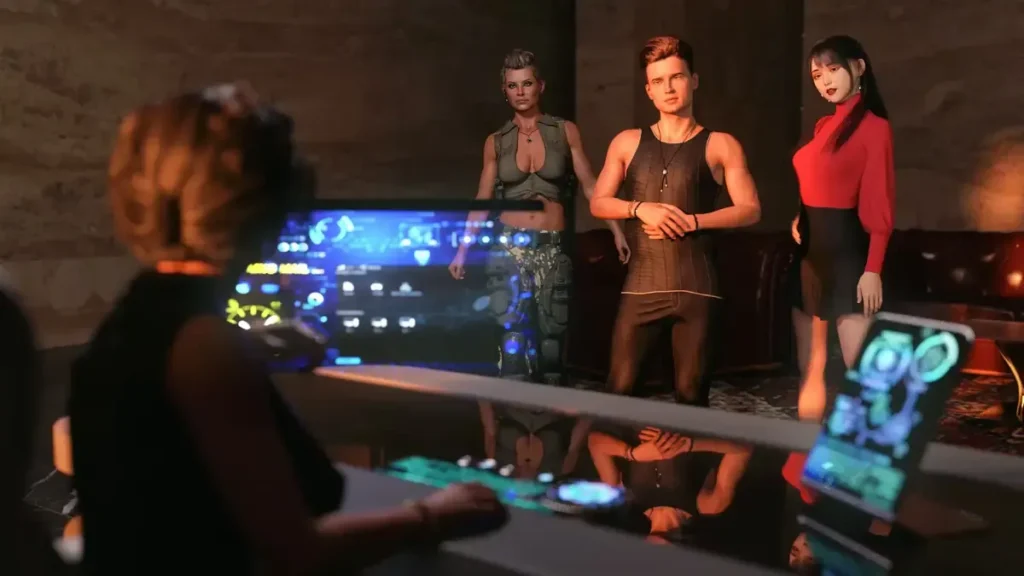













How to Fix the Future review
Complete walkthrough and strategy guide for the sci-fi dating simulator
How to Fix the Future is an engaging visual novel that blends sci-fi storytelling with dating simulator mechanics. This guide explores everything you need to know about navigating the game’s complex narrative, building meaningful relationships with characters, and uncovering the mysteries surrounding the corporation’s influence on society. Whether you’re new to visual novels or a seasoned player, this comprehensive resource will help you maximize your gaming experience and discover all the game has to offer.
Understanding How to Fix the Future: Game Overview and Core Mechanics
Ever find yourself staring at a screen, overwhelmed by sprawling open-world games, and just craving a story that grabs you? That was me last month. Then I found How to Fix the Future, and it completely rewired my expectations. This isn’t just another game; it’s a gripping, character-driven journey where your words are your most powerful weapon. If you love the idea of your choices genuinely shaping a narrative, with a brilliant sci-fi twist, you’re in the right place. Let’s dive in. 🚀
This guide will break down everything you need to know, from its unique heart to the visual novel gameplay mechanics that make every decision pulse with consequence. Consider this your first, and most important, mission briefing.
What is How to Fix the Future and What Makes It Unique?
So, what exactly is How to Fix the Future game? On the surface, it’s a sci-fi visual novel blended with a deep dating simulator strategy. But that sells it short. Imagine you’re recruited by a shadowy corporation from the future, not as a soldier, but as a “Temporal Relationship Consultant.” Your job? To travel back in time and use social engineering—basically, conversation and connection—to prevent a cataclysmic war. It’s Back to the Future meets The Social Network, and it’s utterly brilliant.
What makes it stand out in a crowded field? Two things: authentic consequences and genuine intellect. This isn’t about picking the obviously “nice” or “flirty” option to see a heart icon pop up. The writing is sharp, the characters are complex, and the game respects your intelligence. I remember one early conversation with the brilliant, guarded scientist Chloe. I tried a cheesy, over-confident approach, thinking it was the “charming” option. She saw right through it, called me out, and my access to a crucial lab was restricted for the next two in-game days. The game remembered. It learned. And I was hooked.
The time travel narrative game framework isn’t just a backdrop; it’s the core. You’re not passively watching history unfold; you’re surgically altering its emotional bedrock. Will you forge a romantic connection to inspire a key figure? Build a friendship based on mutual respect? Or manipulate a rivalry to serve a greater good? The How to Fix the Future experience is defined by these nuanced, morally complex questions. It’s a game where a heartfelt conversation over coffee can be more consequential than a laser battle.
Core Gameplay Mechanics and How to Navigate the Game
At its heart, the How to Fix the Future game is driven by its visual novel gameplay mechanics. This means you’ll spend most of your time reading beautifully written dialogue, making choices, and watching the story branch based on your decisions. But let’s get tactical. How do you actually play and succeed?
The Dialogue & Decision Engine:
Every conversation is a puzzle. You’re presented with dialogue options that reflect different tones, tactics, and levels of emotional intelligence. A single chat can have objectives like “Gain Chloe’s Trust” or “Learn Derek’s Motives.” The game’s genius is that the “right” choice is never clear-cut. It depends entirely on the character’s personality, their current mood, and your prior interactions. This is where dating simulator strategy evolves into something more profound: character relationship building as a precise tool.
The Academy Training System:
Before each major “mission” into the past, you attend the Academy. This is your strategic hub. Here, you don’t level up combat skills; you level up social and intellectual aptitudes. Think of it as your character sheet for a therapist-spy. You’ll invest points earned from successful interactions into skills like:
* Empathic Analysis: Unlocks deeper insights into a character’s hidden emotions during chats.
* Historical Context: Provides crucial background info during conversations, opening new, more informed dialogue paths.
* Logical Persuasion: Allows you to construct compelling, fact-based arguments for skeptical characters.
* Charm: Not just for romance! This smooths over awkward moments and makes characters more receptive.
Choosing how to build this “skill tree” is a core part of your dating simulator strategy. Focusing on Empathic Analysis might be perfect for navigating Chloe’s defensive walls, while Logical Persuasion could be key to winning over the pragmatically-minded Derek.
Pro Tip from a Time-Traveler: Don’t spread your points too thin early on. In my first playthrough, I tried to be a jack-of-all-trades and struggled to make deep connections. On my second run, I specialized in Empathy and History to fully win over Chloe’s route, and the story unfolded in incredibly rich ways I’d completely missed before.
Key Gameplay Features and Mechanics Checklist:
To master the visual novel gameplay mechanics, keep this checklist in mind during every session:
- 🕵️ Profile Scanner: Click on characters during scenes to get a live read on their mood (e.g., “Agitated,” “Reflective,” “Playful”). This is your most important real-time data!
- 📊 Relationship Meters: Hidden from plain view, but you can feel their weight. Major characters have relationship levels that unlock (or lock) entire story branches and endings.
- 💾 The Timeline Log: Your bible. This tracks every major choice you’ve made, showing clear “Divergence Points.” It’s essential for any visual novel walkthrough you create for yourself.
- 🔍 Investigate Mode: In certain scenes, you can examine the environment for clues that will give you unique dialogue options later.
- ⏳ Temporal Echoes: Sometimes, you’ll see faint “echoes” of potential futures during a conversation—a brief image or phrase. These are not random; they’re hints about the long-term consequence of your current choice.
The Butterfly Effect, Literally:
This is the crown jewel of the How to Fix the Future design. Small, seemingly innocent choices can ripple outward in huge ways. Helping a side character with a personal problem might lead to them giving you a vital piece of information three “missions” later. This makes following a rigid visual novel walkthrough almost counterproductive. The real joy is living with your decisions and seeing the unique story you create.
Story Setting and Character Introduction
The setting of How to Fix the Future is a masterclass in blending the familiar with the fantastic. You operate from “The Academy,” a sleek, high-tech facility in a future that’s managed to be both utopian and deeply uneasy. Time travel exists, but it’s bureaucratized, owned by the enigmatic Kronos Corporation. Your missions take you to meticulously crafted past eras—think a 1990s university campus, a 1970s tech expo, or a 1940s wartime laboratory. The art style shifts subtly to match each period, making every jump feel distinct and immersive.
Your role is defined by paradox: you must change the past to save the future, but the corporation’s rules are strict about how much you can change. It’s a constant, thrilling tension between your mission objectives and your growing connections to the people you’re supposedly just “consulting” on.
Now, let’s meet the people who make this sci-fi visual novel so unforgettable. Character relationship building is the entire point, so understanding who you’re dealing with is your first step to success.
| Character | Role / Era | Key Personality Traits | Relationship Building Key |
|---|---|---|---|
| Chloe | The Prodigy | 1990s University | Brilliant, guarded, ethically driven, secretly insecure. | Respect her intellect. Be patient and authentic. Pretentiousness is an instant fail. Shared curiosity is your best bridge. |
| Derek | The Architect | 1970s Tech Scene | Charismatic, ambitious, visionary, morally flexible. | Appeal to his legacy. Debate ideas boldly. Show him how your goals align with his vision for influence. |
| The Handler (Maya) | Your Kronos Corp. Liaison | The Future | Professional, by-the-book, secretly conflicted about her role. | Prove your reliability. Questioning corporate motives can build a clandestine alliance or get you reprimanded. |
| Professor Alistair Finch | Mentor Figure | 1940s/1990s | Wise, weary, carries the burden of temporal knowledge. | Seek guidance, not shortcuts. He values long-term stability over quick fixes. Honesty earns his crucial support. |
👆 Bookmark this table! Referencing these core traits will inform your dating simulator strategy more than any generic guide.
Chloe is often the first deep relationship players pursue, and for good reason. Her storyline is a poignant exploration of ambition versus humanity. Derek’s path is a thrilling, dangerous dance with power. But remember, this is a time travel narrative game about fixing a broken future. Romantic routes are deeply fulfilling, but so are forging unbreakable friendships or redeeming rivalries. The “best” ending isn’t about who you kiss; it’s about the web of connections you weave to bear the weight of a new tomorrow.
Understanding this world and its inhabitants is your foundation. With this overview of the How to Fix the Future game, its unique visual novel gameplay mechanics, and the cast that brings its heart to life, you’re now ready to step into the Time Stream. In our next chapter, we’ll get into the nitty-gritty: your first mission, a detailed visual novel walkthrough for critical early decisions, and advanced strategies to master the art of temporal influence. Your future—and the past—awaits.
How to Fix the Future offers a rich narrative experience that combines time-travel intrigue with meaningful character interactions. By understanding the game’s mechanics, mastering dialogue choices, and strategically building relationships, you can unlock multiple story paths and endings. The game rewards exploration and experimentation, so don’t hesitate to replay sections and try different approaches. Whether you’re drawn to the sci-fi plot, character development, or the challenge of uncovering all story branches, this visual novel delivers an immersive experience that keeps players engaged. Start your journey today and discover what it truly means to fix the future.